

By Jeromy Wells
The Cooperative Baptist Fellowship (CBF) has endorsed over 1,200 chaplains and pastoral counselors since 1998. Our CBF chaplains lead with compassionate presence in a variety of specialized clinical and non-clinical settings worldwide. It’s quite possible that one or more of our chaplains attend your church. Do you ever wonder what it’s like to be a chaplain? Do you have questions you want to ask them? How do you support them as ministers and as congregants? 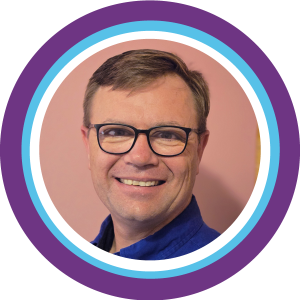
If you’ve wondered about any of those questions, Pastoral and Spiritual Care Week is the perfect time to get to know your chaplains better, celebrate them, and support them in their work. This year’s Spiritual Care Week is October 18-24, 2026, with the theme “Healing Through Presence and Grace.” Throughout this week, you will have the opportunity to hear how chaplains embody the presence of Christ in their non-religious institutions.
I received my first endorsement letter from George Pickle while at Campbell University Divinity School in 2002 to be a Chaplain Candidate in the United States Air Force. Since then, I have served as a hospital, military, hospice, and mental health care chaplain. Over the course of my career as a chaplain, I have had the privilege to care for people from a variety of backgrounds and belief systems during some of the worst times in their lives.
I tried to capture the essence of this ten years ago in a CBF blog titled “Shining through the broken pieces.” The idea of finding meaning through imperfection fit where I was in my life and what I had seen. Yet, I had no way of knowing how that theme would continue to play out in my life and ministry.
Over the last three years, I have served in a behavioral health care context with over 540 inpatient and residential beds for individuals living with trauma, eating disorders, obsessive-compulsive disorder (OCD), substance use disorders (SUD), and mood disorders. A few of the most common phrases and words we hear are “Why?” “I can’t do this anymore,” and “I’m broken.” This is the place where chaplains live and make their living – in the places of doubt, hopelessness, despair.
To be aware of disconnects is good. Over time, however, we can become callous and apathetic toward them and fail to address them appropriately. For example, spiritual struggles are biblical, not pathological. But when we dismiss, judge, and fail to care for them, they become unhealthy and destructive. Another example is how often we talk about ourselves as broken. The problem is that we’re not objects to be fixed but human beings longing for connection and nurture. Finally, ironically, we as a community often not only see brokenness as bad but judge it as evil. It’s as if we’ve never heard of the words, “My body which is broken for you” (1 Cor 11:24, NKJV). Our neural and spiritual pathways get stuck. We need something to jolt our minds and spirits free from autopilot.
This year’s theme for Spiritual Care Week highlights healing, not fixing. Healing is about reimagining, co-creating, and finding hope again. The Japanese art form of Kintsugi is a tangible metaphor for how we do this with things. It shows how value can grow exponentially after something has been broken and artfully repaired. Imagine what happens when we live that process out in communities of faith with compassion and grace.
The CBF has 948 chaplains actively serving, showing up every day with open hearts and minds to walk with others through times of struggle and uncertainty. Yet have you ever wondered who cares for us, especially with our own doubts and questions, or struggles and feelings of brokenness?
Well, the good news is that if a chaplain attends your church, you are already part of a community that nurtures and refreshes their soul. They chose your church, and you matter to them. And whether they share it or not, they need your continued care and support.
I’ve adapted the acronym LOVE that my former manager, Christine Dawley (LPC), and I came up with to help our staff support and address our patients’ spiritual needs.
Listen– Empathetic listening deepens connection.
Observe– Observing is about being curious, or as Ted Lasso reminded his skeptics in season one, “Be curious, not judgmental.”
Validate– Validation acknowledges another person’s story without dismissing or trivializing their experience.
Extend– In its original context, this meant “to extend an offer for spiritual care.” For congregations seeking to better support their chaplains, I suggest “to extend” means moving beyond our comfort zones. It means moving towards the margins rather than away from them. Many of your chaplains live in that space. The most important thing is to intentionally and authentically show your LOVE.
May the love of God continue to guide us in our ministries as we seek to celebrate, uplift, and support our CBF chaplains this month.
Here are some resources to learn more about professional chaplaincy and support chaplains’ mental health.
- To learn more about The Impact of Professional Spiritual Care, see https://www.apchaplains.org/resources/the-impact-of-professional-spiritual-care/
- To learn more about Cognitively Based Compassion Training CBCT® at Emory University, see https://compassion.emory.edu/cbct-compassion-training/index.html
- To learn more about the Clergy Health Collaborative at Duke University, see https://clergyhealth.duke.edu/about/clergy-health-collaborative
- To find a licensed counselor in your area, see https://www.psychologytoday.com/us/therapists
Chaplain Jeromy is the manager of spiritual care at Rogers Behavioral Health in Oconomowoc, Wisconsin. His team provides spiritual care for 545 inpatient and residential patients living with depressive and bipolar mood disorders, eating disorders, obsessive compulsive disorders, substance use disorders and trauma.
Find resources to celebrate Spiritual Care Week here.